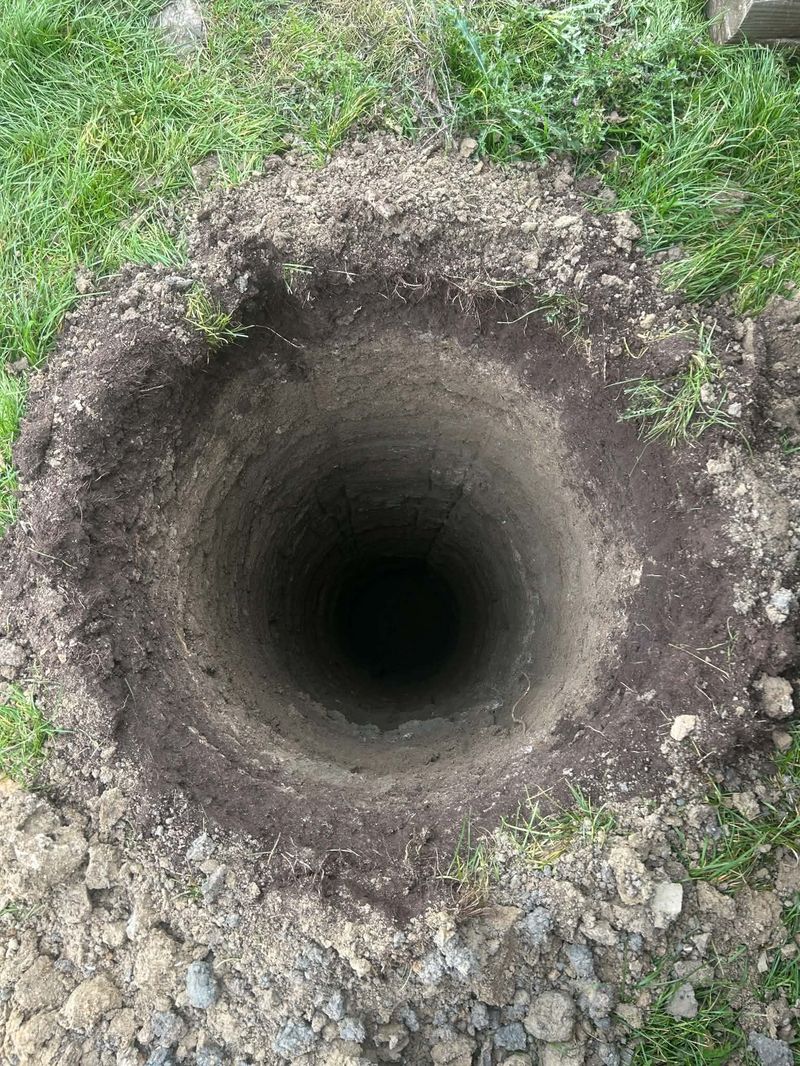
One of the most common questions we get is: how deep does a soak pit need to be? The honest answer is that there's no single number — it depends on your soil type, your water table, and the volume of water you need to dispose of. Here's how to think about it.
What Is a Soak Pit?
A soak pit (also called a soakage pit or soakhole) is a drilled or dug hole filled with aggregate that allows water to slowly disperse into the surrounding soil. They're used for greywater disposal, stormwater management, and drainage on rural properties and lifestyle blocks where connection to a reticulated system isn't practical.
Our drilled soak pits are 1 metre in diameter — perfectly round — which gives them a much larger surface area for soakage than a typical dug pit of the same volume.
The Key Factors That Determine Depth
1. Soil Type
This is the most important factor. The goal is to drill into free-draining gravel — the layer of the soil profile where water will disperse quickly. In Canterbury's Canterbury Plains and river valleys, this gravel layer is often found at 2–4 metres depth. In other areas it may be deeper or shallower.
If you're on heavy clay soil, a drilled soak pit may not be the right solution — clay doesn't drain well regardless of depth. We'll tell you honestly if a drilled pit isn't going to work on your site.
2. Water Table
The bottom of your soak pit must stay above the seasonal high water table. If the pit extends into the water table, it won't drain properly and can cause groundwater contamination. In low-lying or flood-prone areas, this can limit how deep you can go.
3. Volume of Water
The more water you need to dispose of, the more soakage capacity you need. Capacity is a function of both depth and diameter. Our 1m diameter drilled pits have significantly more soakage surface area than a smaller dug pit, which means you often need less depth to achieve the same result.
Typical Depths We Drill
As a general guide for Canterbury and the South Island:
- Lifestyle block / residential greywater: 3–5 metres is typically sufficient if you're into good gravel
- Stormwater disposal: 4–6 metres depending on catchment area and rainfall intensity
- High-volume applications: 6–10+ metres, or multiple pits
We don't give a fixed depth quote without knowing your site. When we come out to quote, we'll look at the soil profile, check any available bore log data for your area, and recommend the right depth for your specific situation.
Can I Have Multiple Pits?
Yes — and for high-volume applications, multiple pits connected in series or parallel is often a better solution than one very deep pit. Multiple pits spread the soakage load and provide redundancy if one pit becomes blocked over time. We'll advise on the best configuration for your needs.
What About Council Requirements?
For most residential greywater and stormwater applications, there are no specific depth requirements from regional councils — the requirement is simply that the pit works (i.e., the water disperses and doesn't surface or cause problems). However, some district councils have specific requirements for new builds — check with your local council or building consent authority if you're doing a new build.
Need a Soak Pit Drilled?
We'll assess your site and recommend the right depth and configuration. Get a free, no-obligation quote today.
Get a Free Quote